
Lease Calculator
Lease Types
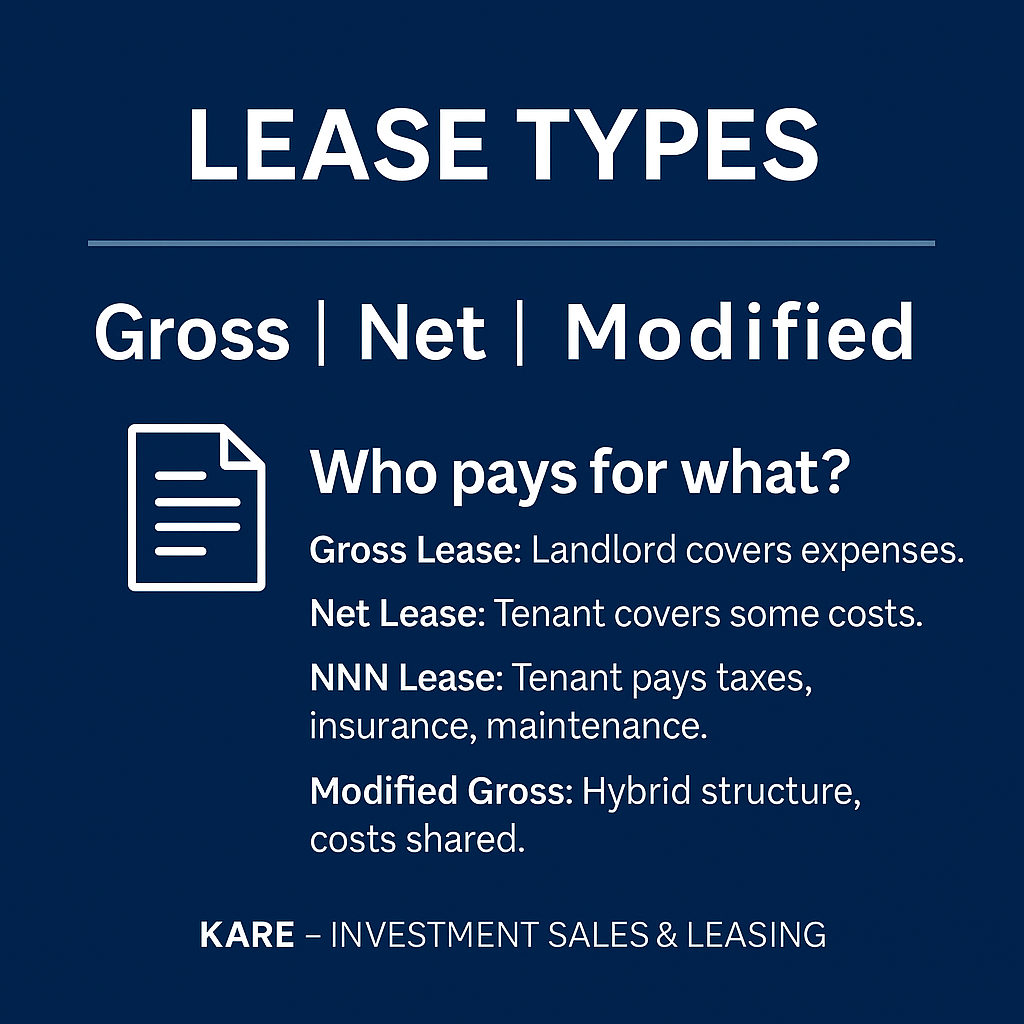
Gross Lease: Predictable costs for tenants; landlord absorbs expense changes.
Net Lease: Shifts some costs to tenants; varies by Single, Double, or Triple Net.
NNN Lease: Popular for retail/industrial; tenant handles taxes, insurance, and maintenance.
Modified Gross: Common in multi-tenant offices; blends landlord and tenant expense sharing.
Tenant Incentives
Free Rent: Temporary rent relief offered at the start or during the lease term.
Tenant Improvement Allowance (TIA): Landlord contribution to fund buildout or renovations.
Renewal Options: Rights that allow tenants to extend the lease at predetermined terms.
These incentives reduce upfront costs and improve affordability while helping landlords secure long-term occupancy.
Rent vs. Buy (for Businesses)
Compares the cost of leasing space to the cost of ownership.
Formula: Rent = Lease Rate × Size ÷ 12 · Buy = Loan Payment
Access our Loan Payment Calculator to figure out accurate monthly payments.
Leasing preserves flexibility with lower upfront costs, while buying builds equity and long-term stability.
FAQ
1. What is Net Effective Rent (NER)?
Net Effective Rent is the average rent a tenant pays after accounting for concessions such as free rent and tenant improvement allowances. It shows the true cost of a lease.
2. What is the difference between Gross and NNN leases?
In a Gross Lease, the landlord covers most or all operating expenses. In a Triple Net (NNN) Lease, tenants pay base rent plus taxes, insurance, and maintenance.
3. How can I use the Lease Calculator?
Enter key lease details such as rentable square feet, base rent, term, free rent, and tenant allowance. The calculator will show effective rents, landlord NPV, and total occupancy costs.
4. What are common tenant incentives?
Landlords often offer free rent, tenant improvement allowances (TIA), or renewal options to attract and retain tenants.
5. Should I lease or buy commercial space?
Leasing provides flexibility and lower upfront costs, while buying builds equity and long-term stability. Use the Rent vs. Buy tool along with the Loan Payment Calculator to compare options.
6. How does the Loan Payment Calculator help?
It estimates your monthly mortgage payments based on loan amount, interest rate, and term — giving you a clear comparison to monthly rent.What is a Tenant Improvement Allowance (TIA)?
TIA is a landlord’s contribution toward the cost of building out or improving the tenant’s space. It reduces the tenant’s upfront costs.
7. What is Free Rent?
Free Rent, or rent abatement, is a concession where the tenant pays reduced or no base rent for a set period (often at lease start).
8. What are Operating Expenses or NNN charges?
NNN (triple net) charges include property taxes, insurance, and maintenance. These costs are passed through to tenants in addition to base rent.
9. Why are escalations included in leases?
Escalations are annual increases in rent, often a fixed percentage, to keep pace with inflation and rising property costs.
10. What is a Security Deposit in a lease?
A security deposit is money held by the landlord to cover potential defaults or damages. It’s usually refundable at the end of the lease if all terms are met.
11. What is a Renewal Option?
A renewal option gives the tenant the right (but not the obligation) to extend the lease term at predetermined terms, providing long-term flexibility.
12. What is Percentage Rent?
Percentage rent is an additional rent payment based on a tenant’s sales, commonly used in retail leases alongside base rent.
13. What is a Sublease?
A sublease occurs when a tenant rents out all or part of their leased space to another party, while still remaining responsible under the original lease.
14. What is a Right of First Refusal (ROFR)?
A ROFR gives the tenant the option to lease additional space in the building before the landlord can offer it to other tenants.
15. What are Common Area Maintenance (CAM) charges?
CAM charges cover shared expenses such as landscaping, parking lot maintenance, cleaning, and security in multi-tenant properties.
16. What is a Triple Net (NNN) Investment Property?
It’s a property leased under a triple net lease where the tenant pays taxes, insurance, and maintenance, providing landlords with predictable, “hands-off” income.
17. What is the difference between rentable and usable square feet?
Usable square feet is the tenant’s actual space, while rentable square feet includes a share of common areas (hallways, lobbies, restrooms).






Disclaimer
This Lease Calculator is provided for educational purposes only and does not constitute legal, financial, tax, or investment advice. The outputs are estimates based on user inputs and simplified assumptions. Actual lease terms, operating expenses, concessions, and investment performance will vary depending on landlord negotiations, tenant credit, market conditions, and property-specific factors. Users should consult qualified legal, financial, and real estate professionals before making any leasing or investment decisions.. Users are solely responsible for verifying all calculations and assumptions before making any investment or financing decisions.KARE – Investment Sales & Leasing makes no warranties or representations regarding the accuracy, completeness, or suitability of these tools for any particular use. Please consult with qualified professionals (lenders, accountants, attorneys, or financial advisors) before acting on the results generated by these calculators.