
Cap Rate & Valuation Calculator
Please enter at least two values (NOI, Price, Cap Rate).
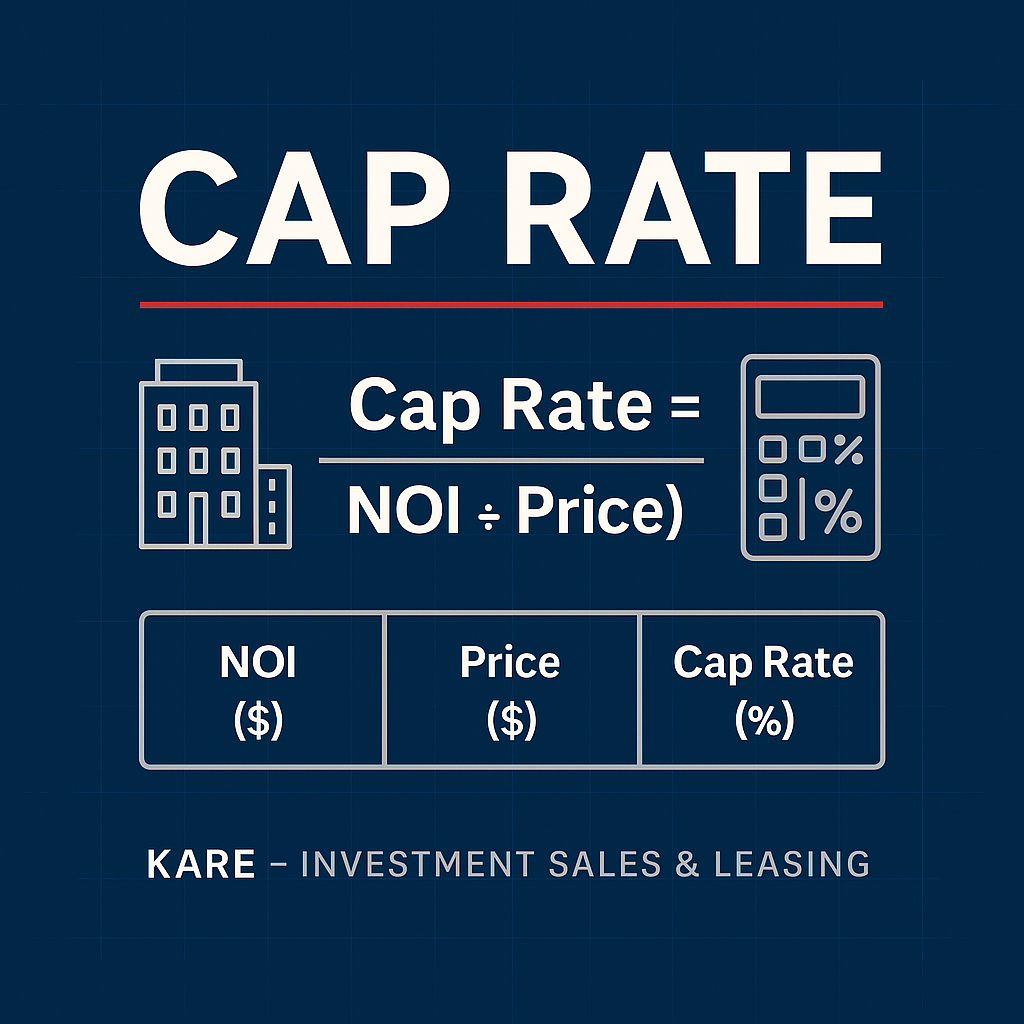
CAP RATE
Snapshot return from operations—before financing
Formula: NOI ÷ Price × 100
Higher cap = higher yield (often higher risk)
Compare properties and submarkets apples-to-apples
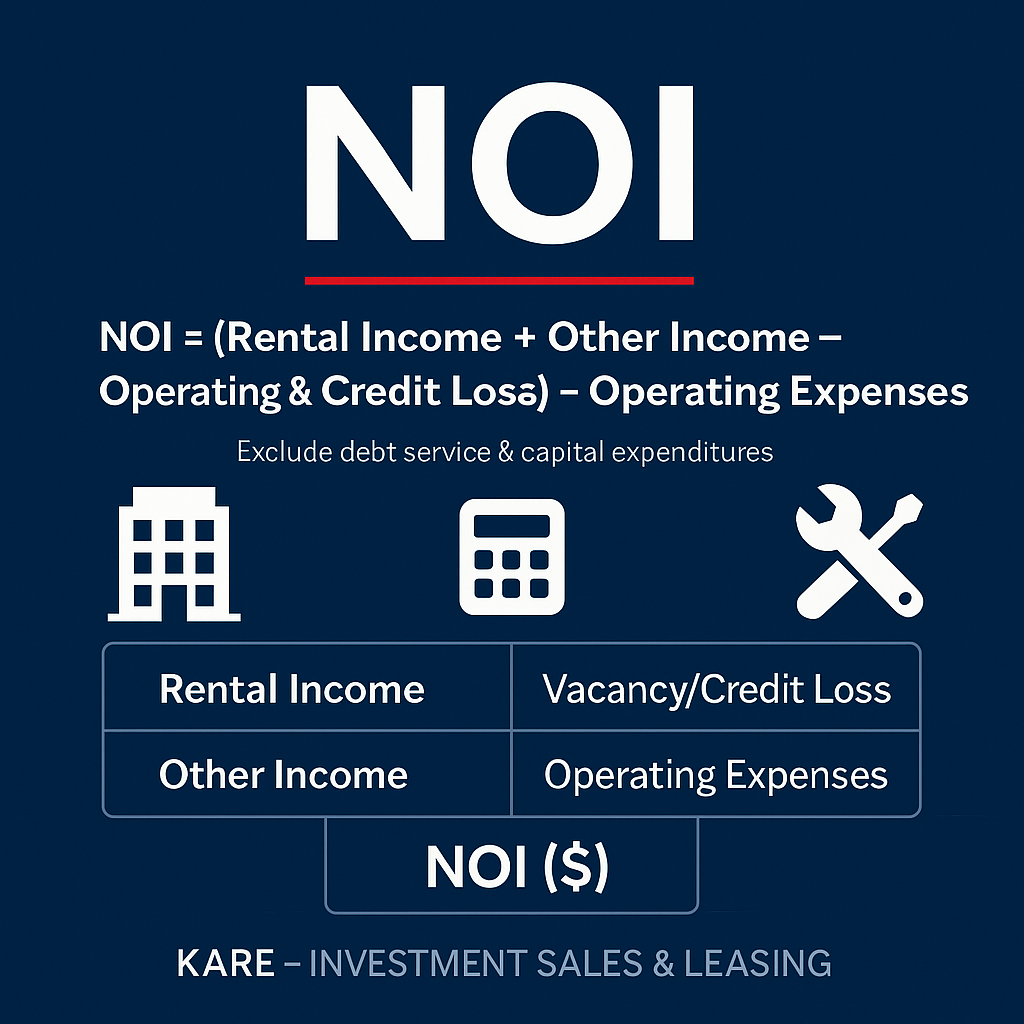
NET OPERATING INCOME (NOI)
Income after operating expenses; exclude debt service & capex
NOI = Rental Income + Other Income − Vacancy/Credit Loss − Operating Expenses
Core input for valuation, lending, and DSCR
Improve by raising rents, cutting OpEx, and stabilizing occupancy
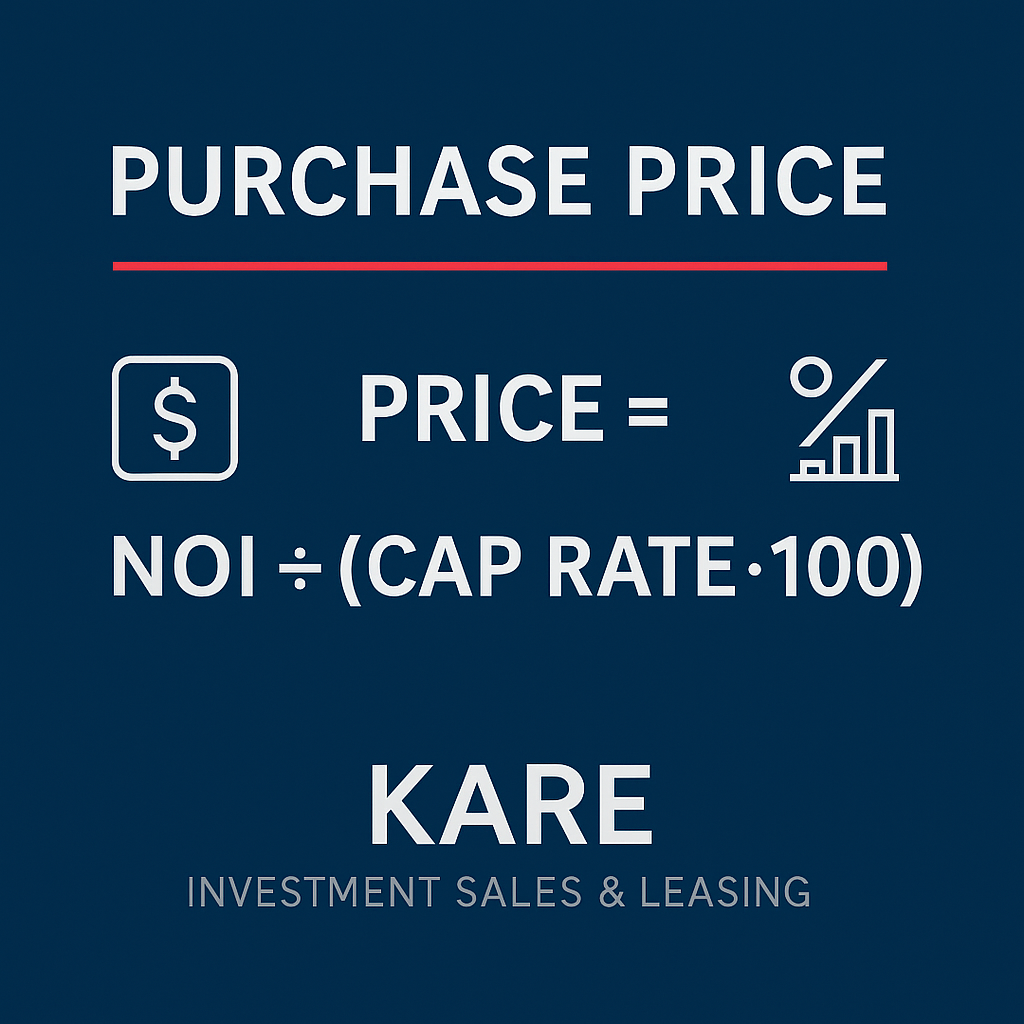
PURCHASE PRICE (VALUATION)
Price = NOI ÷ (Cap Rate ÷ 100)
Small cap-rate changes can swing value significantly
Use market cap rates for the asset type and submarket
Adjust for near-term NOI shifts (lease-up, renewals, OpEx changes)
FAQ
What is a cap rate?
The unlevered yield on a property’s current NOI at a given price.
Does the calculator include financing?
No, this is pre-debt. It’s meant for apples-to-apples valuation.
What NOI should I use?
Stabilized annual NOI (rents + other income − vacancy/credit loss − OpEx). Exclude loan payments and capital improvements.
How precise is this?
It’s a guide. Actual pricing depends on lease terms, credit, rollover, condition, location, and debt markets.
Can I use this for development deals?
For stabilized yield, yes. For projects, pair this with a pro forma and a yield-on-cost analysis.
What’s next if I like the numbers?
Request a Broker Opinion of Value, and we’ll benchmark comps, cap rates, and buyer pools for your submarket.
What vacancy should I assume?
Use actual vacancy for in-place, and a market vacancy (e.g., 5%–10%) for stabilized/pro forma.
Can I use this for development deals?
Use a stabilized NOI and a market exit cap once the project is leased. For construction periods, build a cash-flow model.
Gross vs. NNN Leases—How Do I Handle Them?
For gross, expenses are on the owner; for NNN, tenants reimburse most OpEx. Just ensure the NOI reflects the true net.
How do short remaining lease terms impact the cap rate?
Shorter WALT usually means a higher (softer) cap due to rollover risk; adjust the cap rate accordingly.
Where do market cap rates come from?
Recent comps, broker opinions (BOV), research reports, lender/appraisal data, and active buyer feedback.






Disclaimer
This tool is for educational purposes only and does not constitute an appraisal, valuation opinion, or investment advice. Figures are estimates based on user inputs and indicative market ranges.Actual financing terms, operating results, and investment performance will vary based on lender underwriting, market conditions, and property-specific factors. Users are solely responsible for verifying all calculations and assumptions before making any investment or financing decisions.KARE – Investment Sales & Leasing makes no warranties or representations regarding the accuracy, completeness, or suitability of these tools for any particular use. Please consult with qualified professionals (lenders, accountants, attorneys, or financial advisors) before acting on the results generated by these calculators.