
1031 Exchange Advisory
A 1031 Exchange allows investors to defer capital gains taxes by reinvesting proceeds from the sale of one property into another “like-kind” property. At KARE Investment Sales & Leasing, we guide our clients through every stage of the exchange process, ensuring compliance with IRS regulations while maximizing investment outcomes.
We provide strategic planning to align the exchange with your broader investment goals, from wealth preservation to portfolio diversification. We leverage in-depth market knowledge, advanced financial analysis, and access to both on-market and off-market opportunities to help identify the most suitable replacement properties.
We also coordinate closely with qualified intermediaries, legal advisors, and tax professionals to ensure timelines are met and structures remain compliant, reducing the risk of costly errors. Whether you are upgrading asset classes, repositioning into growth markets, or consolidating holdings, KARE delivers the insights and execution needed to turn a 1031 Exchange into a long-term value creation strategy.
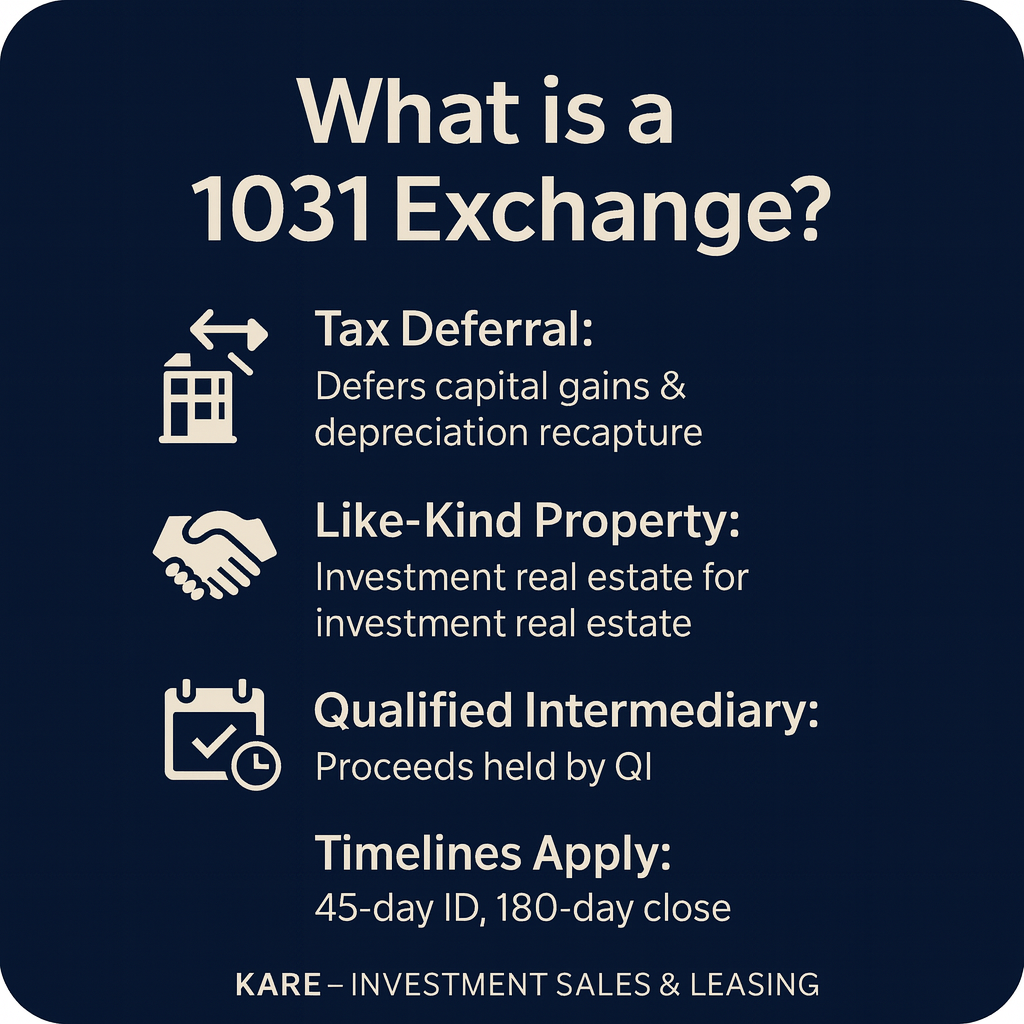
What is a 1031 Exchange?
A 1031 exchange is a transaction under IRC §1031 that lets you sell investment/business real estate and defer capital-gains and depreciation-recapture taxes by reinvesting into like-kind U.S. real estate. To fully defer, you must use a Qualified Intermediary, identify replacement property within 45 days, close within 180 days, buy equal or greater value, reinvest all equity, and replace any debt (or add cash). Taxes aren’t forgiven—any cash or debt shortfall (“boot”) is taxable, and the deferred gain carries into the new property’s basis until a non-1031 sale (or step-up at death).
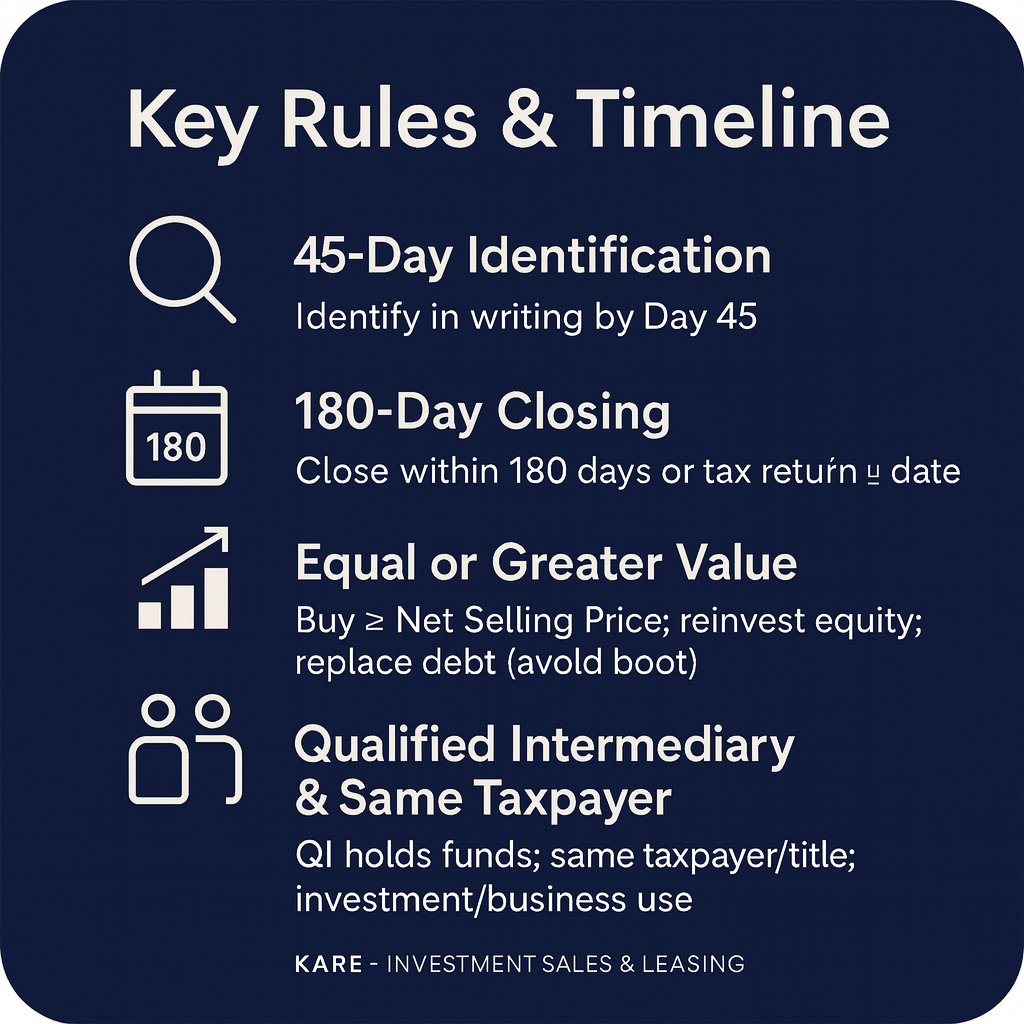
Key Rules & Timeline
You must identify replacement property in writing within 45 days and close within 180 days (or by your tax return due date), and a Qualified Intermediary must hold the proceeds.
To fully defer taxes, buy equal or greater value, reinvest all equity, and replace any debt with new debt or cash to avoid taxable boot.
The same taxpayer must take title and hold for investment/business use, and identifications must follow the 3-Property/200%/95% rules precisely.

Is 1031 Right for This Deal?
A 1031 usually fits when you have a large unrealized gain and want to scale or reposition into equal-or-greater-value investment property.
It’s less attractive if you need cash, are buying much smaller, or can’t meet the 45/180-day and debt-replacement requirements.
Compare Net Cash (Sell Now) vs Net Cash (1031) in your calculator; if the exchange wins and you can comply, involve a Qualified Intermediary and your CPA before listing.